.png)

If you make analytical instruments, or run a CDMO, a CRO or a reagent supply business, an SEO audit will never find this problem — because the cause is not on your website.
The most common conversation I have been having with instrument makers, CDMOs, CROs and reagent suppliers this month is about one uncomfortable discovery: their website says exactly what they do, and AI still describes them as something else.
It is not a copywriting problem. In every one of these conversations the words were already on the site, and ChatGPT, Gemini and Perplexity were still filing the company under a narrower, older version of its business. One CDMO of around 400 people is indexed almost entirely as an ingredient supplier, and appears in fewer than 5% of the AI answers about its own service category. Across the last several of these diagnostics — a CRO, a CDMO, a contamination-control business, a technical ceramics manufacturer and a bioinformatics services firm — every one was either absent from AI answers in its own category or described as something smaller than it sells. One scored 3 out of 10 on AI visibility.
Not one of them had a website problem. All of them had been told the fix was optimisation. Here is what is actually happening, and what changes it.
Key takeaways
- AI misclassification is not a website problem. In every case reviewed this month the correct service line was already on the site, and the answer engines still described the company as something narrower.
- Answer engines run on earned media. Muck Rack's analysis of over a million cited links found earned media accounts for 82% of AI citations; a 25-million-link follow-up put earned media at 84%, owned media at 13.7% and press releases at 1.1%.
- They also work from licensed content and cached indexes, not live crawling. So an older third-party record can outrank a current homepage — which is why the fix is external, not on-page.
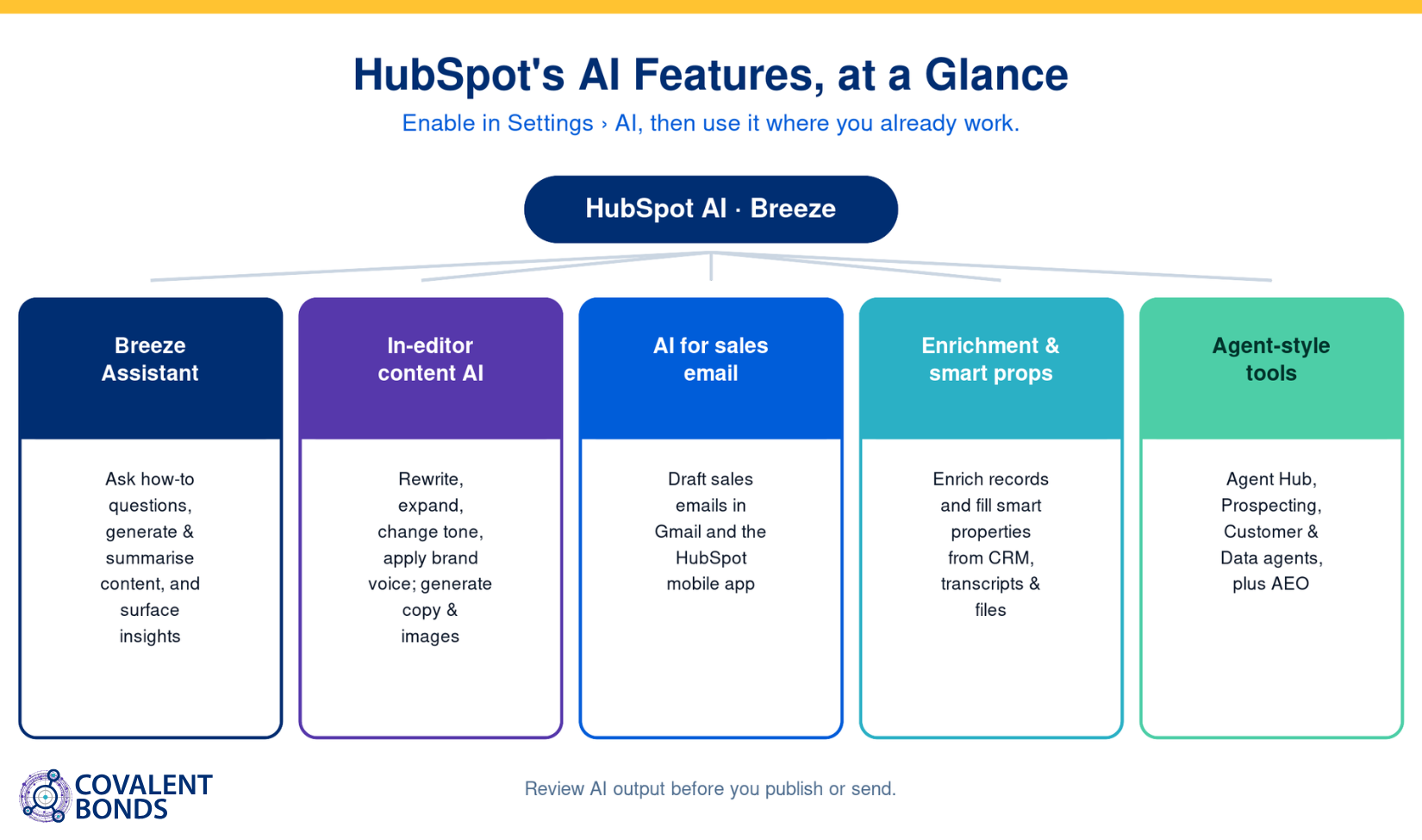
- The correction is measurable, and cheap to start. HubSpot's AI Search Grader is free and needs no account; HubSpot AEO tracks 25 prompts across ChatGPT, Gemini and Perplexity from $50/month.
Why does AI describe my science company as the wrong kind of business?
Because answer engines build their picture of you from external, third-party evidence rather than from your own claims. An LLM assembling an answer retrieves and weighs corroborated material from across the web — trade press, technical articles, directories, forums, encyclopedic references — and forms an entity profile from the consensus. Your website is one source among many, and a comparatively weak one. Muck Rack's citation research puts earned media at 82–84% of AI citations and owned media at around 13.7%.
There is a mechanical reason on top of the editorial one. Answer engines do not browse the web live at the moment you ask a question; they draw on licensed content deals and cached indexes built in advance. A trade journal inside a licensing agreement is already within the model's reach. Your new service page may not be for some time.
That produces a specific failure mode in scientific companies of roughly 50 to 500 people. These businesses grow organically. You start with one product or capability, customers ask for adjacent support, and over fifteen or twenty years you become something broader. The external record — articles, directory entries, citations, third-party mentions — stays weighted toward the original capability. The newer, larger, more profitable side of the business exists on your website and almost nowhere else. The engine reads the weight of the evidence and answers with your past.
What does AI misclassification look like in each kind of science company?
The pattern is the same; the specific error differs by business type. These are the four versions of it I see most often.
|
Business type |
What you actually sell now |
How answer engines tend to file you |
|---|---|---|
|
Analytical instrument maker |
A platform plus applications, methods and support across several markets |
One legacy technique or one market — the application you were first known for, not the range you now cover |
|
CDMO |
End-to-end development and manufacturing |
An ingredient or component supplier, because that is what the older third-party record describes |
|
CRO |
Scientific judgement and embedded expertise |
A commodity outsourcing vendor, or absent entirely from competitor comparisons |
|
Reagent / antibody supplier |
Validated products backed by application data |
A catalogue listing, undifferentiated from resellers, because your validation data sits only on your own site |
|
Lean division of a larger parent |
A specialist capability with its own buyers |
Your parent company — the division's own expertise is absorbed into the group's entity profile |
That last row comes with a second problem: a division rarely controls the corporate website, so the group gets credit for your work and you cannot edit the pages that would fix it.
Why won't an SEO audit or website optimisation fix it?
Because the audit inspects the one source the answer engine is discounting. Run a technical and content audit on a site that already names its service lines clearly and the audit passes — headings clean, schema valid, copy on message. The report says you are fine. The AI answer still says you are something else.
The useful question is not "is my page optimised?" It is "what evidence exists about my company off my own domain, and what does that evidence say I am?" No amount of on-page work changes an external evidence base. This is also why AEO sold as an SEO deliverable stalls: the deliverable is scoped to the website, and the cause is not on the website.
What actually changes how AI describes you?
Three things, in this order.
- Create the external evidence. Get your current capability described in the publications the engines already cite — which the citation data tells you, rather than your own history with an editor.
- Connect that evidence back to you. Each placed article gets a crawlable page on a site you do control, written so an engine can lift a self-contained answer from it and follow the link out. This is the credibility bridge, and it is the reason the method works for divisions that cannot touch the corporate site.
- Measure share of voice, not AI leads. Buyers here research in AI and verify through peers, so deal-level AI attribution will always under-report. Track how often you are named against each competitor, whether the description is accurate, and whether you hold a lead across a whole prompt cluster.
Each of those is a piece of work in its own right, and each has its own post below.
How do you find out where you stand today?
Without spending anything, in about twenty minutes:
- Run HubSpot's free AI Search Grader. No account required, results in a couple of minutes.
- Ask ChatGPT, Gemini, Perplexity and Claude your five core category prompts — definition, use case, comparison, alternatives, and how a buyer chooses a provider. Write down which category each names you in, which competitors it names instead, and which URLs it cites.
- If the answers are wrong or you are absent, set those prompts up as a tracked baseline. HubSpot AEO covers 25 prompts across ChatGPT, Gemini and Perplexity from $50/month, or comes with Marketing Hub Professional and Enterprise.
Do it now rather than when it becomes urgent, for two reasons. Editorial calendars in the strongest scientific and pharmaceutical titles are booked months ahead — one leading title I work with is full into Q1 2027 — so a placement decision made today lands next year. And once a competitor holds a real lead in a category, they keep it in about 90% of month-on-month comparisons. Starting a year late does not put you a year behind; it puts you a year behind a position that has become hard to take.
Frequently asked questions
Why does ChatGPT describe my CDMO as an ingredient supplier?
Answer engines build your entity profile from corroborated third-party evidence, not from your website. If most of the external record describes the single capability you started with, the engine answers with that. Because engines also work from licensed content and cached indexes rather than live crawling, an older third-party record can outweigh a current homepage.
Can I fix AI misclassification by rewriting my website?
Rarely on its own. Muck Rack's research found earned media accounts for 82–84% of AI citations against around 13.7% for owned media, so an unsupported on-site claim carries limited weight against a competitor documented in the trade press.
How do I improve AI visibility if I cannot change my website's code?
Publish earned articles and build a credibility bridge in whatever section of the site you do control. We run exactly this for a client whose corporate site is off limits, and AI answers cite the bridge pages rather than the main site.
Is AEO the same thing as an SEO service?
No. An SEO service optimises your website for ranked results. AEO decides whether an answer engine names and cites you, which depends heavily on evidence sitting off your domain.
How long does it take to change how AI describes my company?
Longer than a content sprint. Editorial lead times in the strongest scientific titles currently run several months, and AI visibility compounds gradually as citations accumulate. Prompt-level appearances shift first; category share of voice takes several measurement cycles.
Start with a baseline, not an audit
Covalent Bonds is an AEO specialist and a HubSpot Gold Partner working with US scientific instrument makers, CDMOs, CROs and reagent suppliers — most of them running marketing with a team of one to three.
Run the free checks above first. If they show a gap, we can give you the full picture: how answer engines currently describe your business, which competitors they name instead, and which third-party sources they cite to do it. That is the starting scoreline and the media target list that comes out of it. Ask for a baseline.
Sources: Earned Media Still Drives Generative AI Citations — Muck Rack, "What Is AI Reading?", December 2025 (1m+ links across ChatGPT, Claude and Gemini), plus Muck Rack's 25-million-link analysis, May 2026, as summarised in Machine Relations research; topic-retention data from AI visibility is a topic-level game, SEMrush with Kevin Indig, 2026; HubSpot AEO and HubSpot AI Search Grader. Verified 19 August 2026; HubSpot's AI visibility feature is currently marked BETA.
Marketing is a science. Assume nothing.
.png)
