
Answer Engine Optimization (AEO) is no longer optional for scientific brands. AI answer engines like ChatGPT now sit between your buyers and your website, deciding which vendors get cited and which stay invisible during the silent research phase. If you lead marketing at a life sciences company, the question isn't whether to start AEO — it's where.
Here are seven practical starting points, each drawn from our own work on AEO strategy for life sciences. Work through them in order, or pick the one that closes your biggest gap first.
1. Reframe the goal: authority, not rankings
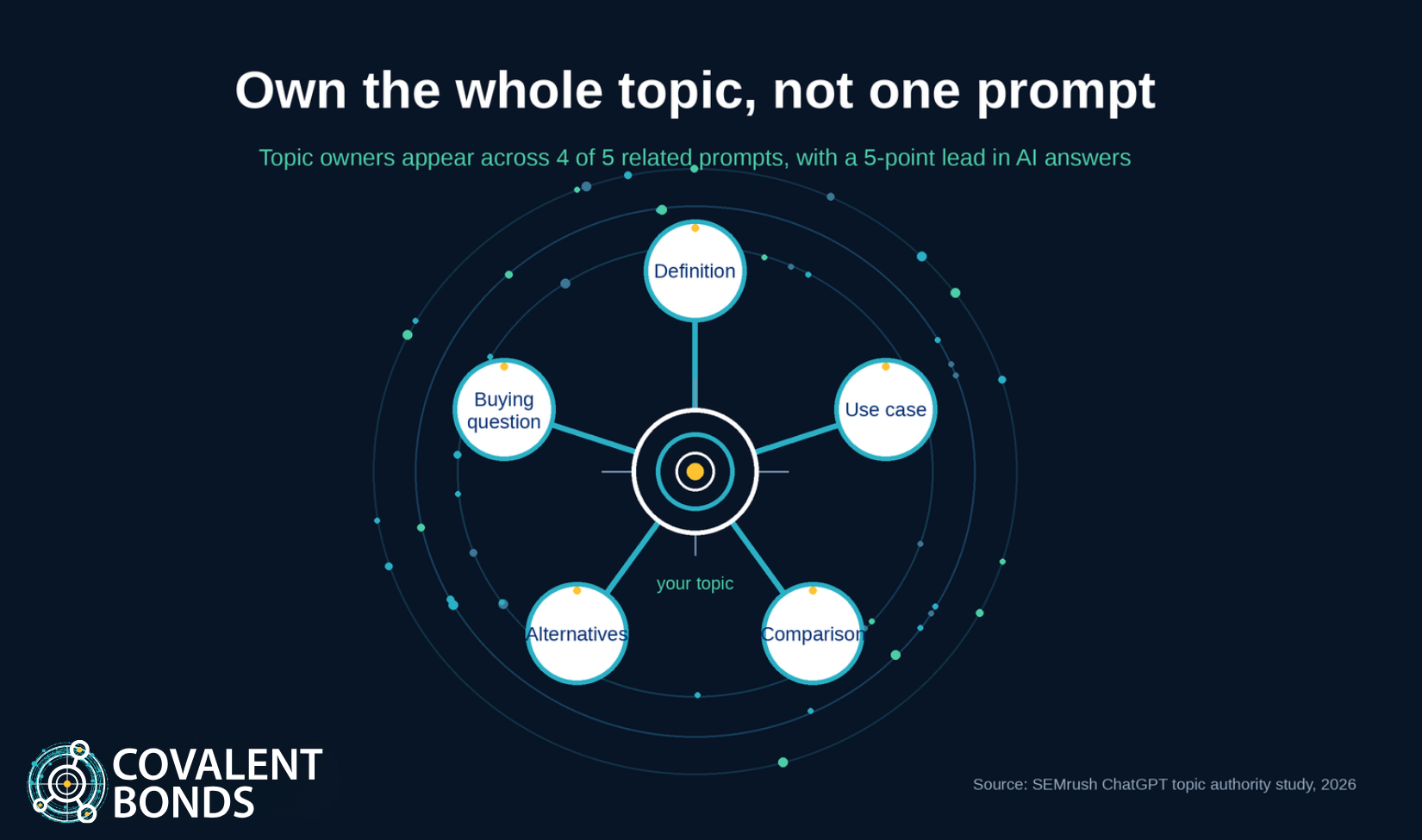
Traditional SEO brings users to your site. AEO gets your content found and used directly by AI engines to build the answer. That means the target shifts from ranking for a single keyword to becoming a topic authority — interconnected content that covers a subject from every angle so AI engines treat you as a definitive source. Start by mapping one core topic and building a content hub around it rather than chasing scattered keywords.
Read more: From SEO to AEO: Navigating the Paradigm Shift in Scientific Marketing
2. Research intent, not search volume
In 2026, visibility is driven by intent architecture, not volume. The high-value phrases your buyers use — like "low background noise IHC protocol for brain tissue" — often show zero search volume in traditional tools, yet a term searched by five directors of procurement can be worth millions in contract value. Use a simple formula to find them: technical workflow + target outcome or constraint + commercial intent. This is where AEO lead generation actually starts.
Read more: The Definitive Guide: Finding High-Priority Technical Keywords for PPC, SEO & AEO in 2026
3. Structure content so machines can parse it
AI engines and skeptical scientists both need content they can read fast. Adopt an IMRAD structure (Introduction, Methods, Results, Discussion) that mirrors the peer-reviewed papers your audience reads daily, use question-based subheaders that match the exact queries scientists type into AI, and mark it up with schema-optimized data. This is the schema and structure layer of AEO, and it's what turns a page into a "silent sales engine."
Read more: Your Content is a Scientific Sales Proxy: Is It Closing Deals or Losing Them?
4. Replace marketing fluff with auditable, evidence-based claims
Answer engines and technical buyers punish vague copy. Swap adjectives for evidence: instead of "high-throughput," say "processed 400 samples per hour with 1% CV." The way to do this at scale is to codify your proprietary technical knowledge — solved protocols, lab-bench intuition, industry bottlenecks — into a "Digital Scientific Brain" that feeds your AI outputs auditable facts rather than generic hallucinations. Accurate, defensible, evidence-backed claims are the closest thing AEO has to a compliance layer for regulated science.
Read more: The Definitive Guide: 10 Tips for Institutionalizing Scientific Marketing Expertise with AI in 2026
5. Turn earned media into AEO authority
Media mentions in technical trade press or peer-reviewed papers are independent validation of your expertise — but most brands let that trust evaporate at the mention. Build a "credibility bridge": when a paper or trade article cites you, create a dedicated page or post that summarizes the finding and links to the source, funnelling that third-party authority back to your domain. It's one of the most underused ways to convert earned media into first-party AEO authority.
Read more: Lazarus Risen: The Definitive Trade Media Strategy for Scientific Marketing SEO and AEO Authority
6. Earn authoritative backlinks that AI reads as expertise signals
AI engines build internal knowledge graphs of who the real experts are, and they use external links from high-authority sources to do it. A citation in respected technical trade press or a peer-reviewed paper is exactly the kind of signal that tells an answer engine you're a credible source — so the goal is to earn placements on the few publications that carry real weight. Use data to find them: in one client audit, layering competitor backlink data against audience analytics let us cut 50% of the target publication list and reinvest in the high-authority channels that actually influence both scientific buyers and AI.
Read more: Precision PR: How Data Can Cut Your Media Spend by 50% While Securing Your Future in AI Search
7. Optimize for the direct answer, not the click
Answer engines reward content they can lift verbatim. Structure your pages to give a clear, concise answer to a specific question, then use headings, bulleted lists, and tables to make it scannable for both AI and human readers — the goal is to hand the engine a ready-made snippet it can pull to answer a query. Back every answer with data, cited research, and third-party validation from KOLs or academic papers, because AI engines favour trusted, evidence-backed sources. This is the most direct lever you have over how an LLM reads and reuses your site.
Read more: From SEO to AEO: Navigating the Paradigm Shift in Scientific Marketing
Where to begin
If you do nothing else, start with points 1 and 3: decide the topic you want to own, then structure that content so both AI engines and scientists can use it. Everything else — intent-led research, evidence-backed claims, direct answers, and authoritative backlinks — compounds from there. That's how life sciences brands move from invisible to cited in AI search.